

Ask a typical UK Amazon seller why they don’t sell into the EU, and you’ll get some version of the same answer: “It’s too much hassle since Brexit. VAT in every country, all that compliance, the paperwork — not worth it.” It’s said with total confidence, as settled fact. And it’s one of the most expensive assumptions in British e-commerce, because it gets the whole thing backwards.
The EU isn’t a harder market. It’s a moat you haven’t crossed yet. And the very hassle that’s putting you off is precisely what makes it worth crossing.
Let me be clear about something first, because I never want to be the person selling a dream: exporting genuinely isn’t for everyone, and I’m not going to tell you it is. But the reasons most people don’t do it are mostly wrong — and worse, the assumption that staying home is the safe, easy option is no longer even true. We’ll come to that.
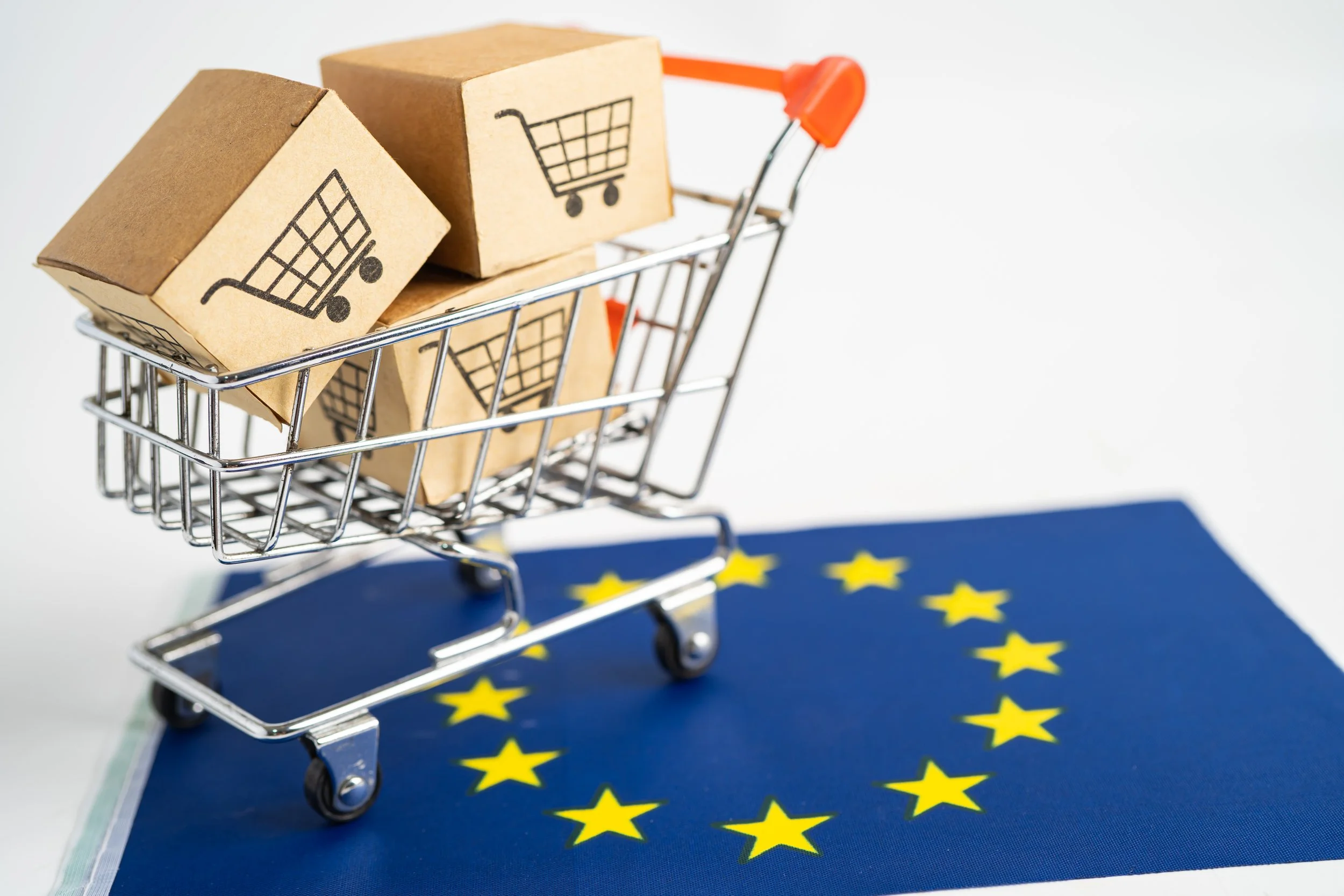
The barriers are smaller than the fear
Start with the fear itself, because most of it is vague. “Brexit made EU selling too hard” is a feeling, not an analysis. When you actually break down what changed, it’s far less dramatic than the anxiety suggests.
Here’s the thing the doom-mongers miss: the single market, for a goods seller, primarily removed one thing — duty-free movement. That’s the substantive change. It’s a real cost and a real bit of friction, but it is one thing, not the impenetrable wall people imagine. The rest of what people lump under “Brexit made it impossible” — VAT registration, product compliance, a responsible person, packaging obligations — a lot of that isn’t even Brexit. Much of it is EU regulation that applies to everyone selling into the EU, including seasoned EU-based sellers. You didn’t lose a magic key that everyone else still holds. You joined the same regime everyone selling into that market operates under.
So the barrier is smaller and more ordinary than the fear. It’s cost and admin, not a locked door. And cost-and-admin is a thing a serious operator solves, not a thing that stops them.
Why a barrier is a moat
Now the reframe that changes everything. Every one of those barriers — the VAT, the compliance, the responsible person, the packaging rules — is annoying. It takes work, money, and patience to get through. And that is exactly why it’s valuable.
Think about what a barrier does. It doesn’t just stand in your way. It stands in the way of every other seller too — and most of them, faced with the hassle, give up, exactly like the typical UK seller in my opening. So the barrier thins the field. The competitors who can’t be bothered to register for VAT, appoint a responsible person, sort their EPR, and handle the admin simply aren’t there when you arrive. You cross the moat, and you find a market with far fewer competitors than the domestic one, because the moat kept the lazy ones out.
That’s the whole logic of a moat: it’s only a wall while you’re on the wrong side of it. The moment you’re across, it stops being your obstacle and becomes your protection — the thing keeping your competitors out of a market you’re now selling into. The frustration you feel getting through the compliance is not the price of a bad idea; it’s the price of admission to a less crowded market, and it’s a price most of your competitors won’t pay. Their reluctance is your opportunity.
The barriers are becoming moats everywhere — which changes the domestic calculation too
And here’s what makes this urgent rather than merely interesting, because the whole global picture is shifting under everyone’s feet. Markets everywhere are putting up walls. The US removed its low-value duty-free exemption in 2025; the EU removed its equivalent in mid-2026. The big markets are becoming more protective of their own, which raises the barriers — and therefore deepens the moats — for whoever’s willing to cross them.
Meanwhile the UK, as of mid-2026, still has its low-value exemption in place, with removal not due until the end of the decade. Which sounds comfortable until you realise what it means: while everyone else pulls up their drawbridge, Britain has left its own door open. That doesn’t make staying home safer. It makes home the easiest target on the board for overseas sellers looking for a market that hasn’t put its walls up yet. We’ll get into that properly elsewhere, but hold the thought: the assumption that “domestic is the safe option” is exactly the assumption that’s about to cost people.
So should you cross it?
Not necessarily — and I’ll always be honest about that. Crossing the moat is real work, and if you’re not willing to do it properly, half-crossing it (a listing live with the compliance not sorted) is worse than not going at all. This is graft, like everything worthwhile on Amazon. It’s not a button you press; it’s a barrier you climb, deliberately, with your eyes open.
But drop the reflexive “it’s too hard since Brexit,” because that instinct is built on a fear that’s larger than the facts and a belief that home is safe that’s no longer true. The EU is a market where the very difficulty that scares people off is the thing protecting whoever’s brave enough to get through it. It isn’t a harder market. It’s a moat — and moats are only walls until you’re standing on the right side of them.
This is general orientation, not legal or tax advice — regulations and dates change, so check the current rules and take professional advice before acting.
FAQ
Is it harder to sell on Amazon EU after Brexit?
Not as much as most UK sellers assume. Brexit mainly removed one thing — duty-free movement of goods between the UK and EU. The VAT registration, product compliance, responsible person requirement, and packaging rules that people blame on Brexit are actually EU regulations that apply to anyone selling into that market, British or not. You're not missing some advantage other sellers still have. You're just now playing by the same rules everyone selling into the EU already follows.
Why do VAT and compliance actually work in your favor on Amazon EU?
Because most of your competition won't bother with them. A barrier doesn't just slow you down — it slows down everyone, and most UK sellers take one look at the admin and quit before they start. That's what thins out the market. Get through the VAT registration and the compliance properly, and you land in an Amazon EU market with noticeably less competition than at home, because the hassle already did your competitor research for you.
Should UK sellers expand into Amazon EU marketplaces?
Not automatically, and be honest with yourself about that. Cross-border selling is real work, and a listing that's live without the compliance sorted is worse than not launching at all. But don't assume staying UK-only is the safer bet either. Other markets are tightening their low-value import rules while the UK hasn't yet, which makes the domestic market an easier target for overseas sellers than most people realize.
About the author
Zamir Cajee is co-founder of This Way Up, a UK business specialising in Amazon marketplace strategy, and co-host of The Upside Podcast, where he and the team break down how Amazon actually works — and how it lies to you. Zamir has built multi-million dollar businesses from scratch and has been selling into the EU since 2016.
Ready to take your Amazon Store to the next level? Start by exploring the tools available to create a standout Storefront or make the process even easier by reaching out to us for tailored guidance.
Subscribe to the This Way Up newsletter for impactful strategies and insights, or tune in to The Upside podcast for expert advice on successfully managing your e-commerce efforts.