

Why You Can't Just Switch Your Ads Off
There's a sentence I've heard more times than I can count, usually said with the satisfied air of someone who's just spotted free money on the table: "We're ranking well organically now. So let's switch the ads off and pocket the savings."
I understand the logic completely. You paid to climb, you've climbed, the organic sales are flowing, so why keep paying? It feels like taking the training wheels off. It's one of the most expensive mistakes in Amazon selling, and understanding why is understanding something fundamental about how the whole system holds together.
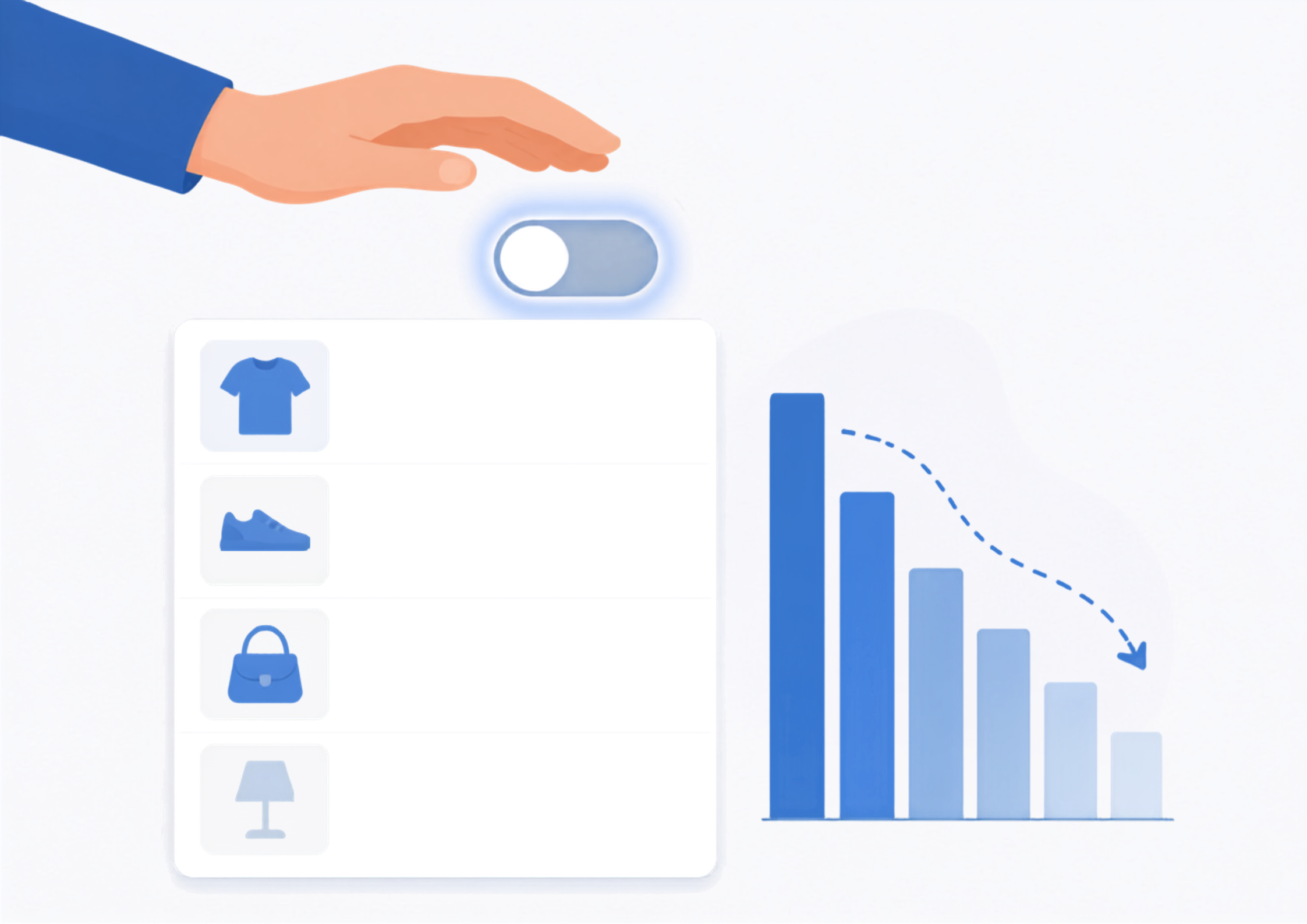
Paid and organic aren't sequential. They're load-bearing.
The mental model behind "switch the ads off" is that paid was a phase. A ladder you climb and then kick away. First you advertise, then you rank, then you're done with advertising. Ladder, roof, goodbye ladder.
But that's not the structure. Paid and organic aren't a sequence. They're a keystone arrangement, each holding the other up. Your organic rank on a competitive term isn't a permanent trophy you won and get to keep. It's a position you're holding in a live marketplace, and it's held up partly by the ongoing flow of clicks, conversions and velocity that your ads are contributing.
Pull the paid support out entirely and you don't stay at the top with the ads' cost removed. You start sliding, because the total signal feeding your position just dropped, and every competitor still advertising on that term is now contributing more relative signal than you. The marketplace reprices. You paid to get the room; you stopped paying; the room gets reallocated.
The maintenance floor
This is why the operator's concept isn't "ads on for launch, ads off when ranked." It's a maintenance floor - a level of ongoing paid presence you can't drop below without your organic position starting to erode.
That floor is real and it's specific to the term. On a fiercely contested generic term with a dozen hungry advertisers, the maintenance floor is high - organic rank there needs meaningful, continuous paid support because the second you ease off, someone fills the gap. On a term you thoroughly dominate, where your brand and your reviews and your conversion are miles ahead of anyone else's, the floor can be low — you might hold rank on a trickle. But it is almost never zero, and assuming it's zero is the mistake.
The skill isn't switching ads off. It's finding where your maintenance floor actually is for each term: the lowest paid presence that holds your organic position, so you're not overspending to defend what's secure, but not under-defending and sliding either.
"But my ACOS on those terms is terrible"
Here's the objection that usually comes next, and it's the ACOS trap wearing a different hat. "Fine, but the ads on the terms I already rank for have a rotten ACOS; I'm paying for clicks I'd half-get anyway." True, if you read those ads as acquisition. But maintenance-floor spend isn't acquisition. It's defence. You're not judging it by "did this click bring a profitable new sale" — you're judging it by "is this presence holding the organic position that's producing all those free organic sales."
Judge maintenance spend by the wrong yardstick, campaign ACOS, and it'll always look like waste, right up until you cut it and watch the far larger organic revenue it was quietly protecting fall over. The right yardstick is total position and total sales on the term. Read it that way and the "terrible ACOS" defensive spend is often the cheapest, highest-leverage money in the account.
The honest version of the free-money instinct
The instinct behind "switch the ads off" isn't stupid. The useful, non-lethal version of it is: stop overspending on terms where you're secure, and reallocate to terms where you're not. That's real money, found intelligently. Not "ads off," but "ads right-sized to each term's maintenance floor, and the freed budget moved to markets you haven't won yet."
That's the operator's move. The amateur switches the ads off, watches the ranking slide, switches them back on in a panic at a higher cost to re-climb, and calls the whole thing bad luck. Don't be that. Find your floors. Defend at them. Spend the difference where it can still win you new ground.
FAQ
Should I turn off Amazon ads once I'm ranking organically?
No. Organic rank on a competitive term is a position held partly by the ongoing signal your ads contribute, not a permanent win. Removing paid support entirely usually causes the ranking to slide as competitors' relative signal overtakes yours.
What is a maintenance floor in Amazon advertising?
It's the minimum level of ongoing paid presence needed to hold your current organic position on a given term. It's specific to how contested that term is, and it's rarely zero, even when you dominate the category.
Why does maintenance spend look bad on ACOS even when it's working?
Because maintenance spend is defence, not acquisition. Judged by campaign ACOS alone it looks wasteful, but its real job is protecting the organic revenue it supports, which campaign-level ACOS doesn't capture.
About the author
Zamir Cajee is co-founder of This Way Up, a UK business specialising in Amazon marketplace strategy, and co-host of The Upside Podcast, where he and the team break down how Amazon actually works and how it lies to you. Zamir has built multi-million dollar businesses from scratch and has been selling into the EU since 2016.
Ready to stop guessing where your maintenance floor is? Start by auditing which terms are overspending and which are underdefended, or make the process even easier by reaching out to us for tailored guidance.
Subscribe to the This Way Up newsletter for impactful strategies and insights, or tune in to The Upside podcast for expert advice on successfully managing your e-commerce efforts.